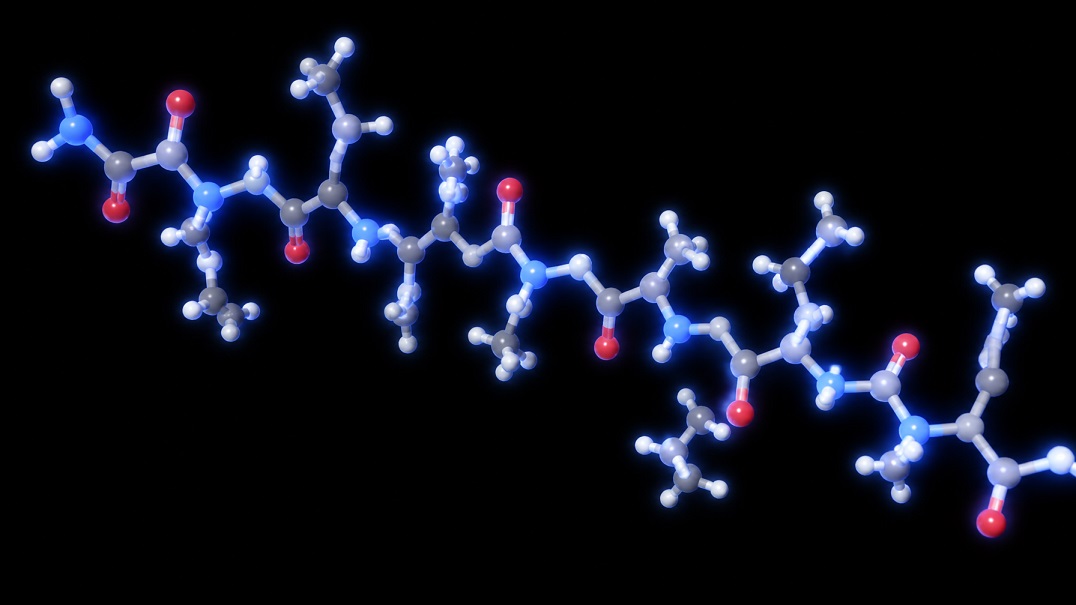
A research peptide is only as good as the conditions it has been kept in. This is not an abstract concern. Peptides are chemically active molecules that can degrade, oxidize, aggregate, or hydrolyze under adverse storage conditions, and a compound that has deteriorated in the vial is no longer the compound it claims to be. The practical consequences range from inconsistent experimental results to entirely wasted material. The good news is that peptide degradation is largely preventable with the right storage approach, and the principles involved are straightforward once you understand why each condition matters. Here is a practical guide to storing research peptides properly, covering both lyophilized material and reconstituted solutions.
Why Peptides Degrade: The Chemistry Behind Storage Requirements
Understanding the mechanisms by which peptides degrade makes the storage recommendations that follow easier to remember and apply, because each recommendation exists to prevent a specific degradation pathway.
Hydrolysis: The Water Problem
Peptide bonds, the chemical linkages holding amino acid chains together, can be cleaved by water in a reaction called hydrolysis. Under neutral conditions this reaction is slow, but it accelerates with heat and in acidic or basic environments. For lyophilized peptides, the absence of free water is the primary protection against hydrolysis, which is why keeping lyophilized material dry is so important. Moisture introduced during storage by condensation, poor sealing, or repeatedly opening a vial in a humid environment accelerates degradation even in the solid state.
Oxidation: The Oxygen Problem
Several amino acids are susceptible to oxidation, including methionine, cysteine, tryptophan, and histidine. Oxidation modifies the side chains of these amino acids, altering the peptide’s chemical structure and potentially its biological activity. Cysteine is particularly reactive, forming disulfide bonds either within the peptide or between peptide molecules. In reconstituted solutions, dissolved oxygen is the primary oxidant. Minimizing headspace in solution vials, working under inert gas for oxygen-sensitive compounds, and protecting solutions from light, which can catalyze photo-oxidation, are the practical responses to this degradation pathway.
Aggregation and Adsorption
Some peptides, particularly longer sequences and those with hydrophobic regions, tend to aggregate in solution, forming non-covalent clusters that reduce the effective concentration of the monomer and can produce misleading results in biological assays. Aggregation is promoted by higher concentrations, higher temperatures, and certain solvent conditions. Related to this, peptides can adsorb to the surfaces of storage vessels, particularly glass and some plastics, which also reduces effective concentration. Low-binding plasticware is available for peptides prone to surface adsorption and is worth using when working with small quantities of material.
Storing Lyophilized Peptides: Best Practices
Most research peptides arrive as lyophilized powders, and this form is the most stable for long-term storage. Proper handling of lyophilized material begins before the vial is even opened.
Temperature Conditions for Long-Term Storage
The standard recommendation for lyophilized peptide storage is minus twenty degrees Celsius, which is the temperature of a standard laboratory freezer. At this temperature, most lyophilized peptides are stable for at least one to two years, and many remain stable considerably longer. Peptides containing particularly reactive amino acids, including cysteine, methionine, and tryptophan, benefit from storage at minus eighty degrees Celsius, which most research laboratories maintain as an ultra-low temperature option. Some manufacturers specify minus eighty degrees Celsius as the recommended storage condition for their more sensitive compounds, and those recommendations should be followed. Storing peptides at refrigerator temperature, around four degrees Celsius, is acceptable for short-term holding of a few weeks but is not appropriate for long-term storage.
Protecting Against Moisture
Lyophilized peptides must be protected from moisture throughout their storage life. Vials should be tightly sealed immediately after receipt and inspected to confirm that the seals are intact before storage. Desiccants in the storage container provide an additional layer of protection by absorbing any moisture that enters. When removing a frozen vial from the freezer for use, allow it to equilibrate to room temperature before opening it. This equilibration step prevents condensation from forming inside the vial when cold material contacts warm, humid air. Condensation introduced during this step can compromise the remaining material, so it is one of the most commonly neglected but important practical precautions in peptide handling.
Light Protection
Several peptide amino acids, particularly tryptophan and tyrosine, are sensitive to ultraviolet and visible light exposure. Storing peptides in amber vials or in opaque containers provides protection against photo-degradation. Most suppliers package light-sensitive peptides in amber glass or include opaque protective sleeves, and maintaining that light protection during storage is straightforward.
Storing Reconstituted Peptide Solutions
Once a lyophilized peptide has been dissolved in solvent, its stability changes considerably. Solutions are more vulnerable to degradation than lyophilized material, and the storage approach changes accordingly.
Short-Term Solution Storage
For peptide solutions that will be used within days to a week, storage at four degrees Celsius in a sealed container is generally appropriate. Solutions should be stored in a manner that minimizes headspace above the liquid to reduce oxygen exposure, particularly for peptides containing oxidation-susceptible amino acids. Solutions exposed to light should be protected by amber vials or wrapped containers. Microbial contamination is also a consideration for solutions stored at refrigerator temperature over more than a few days. Working under sterile conditions during preparation and using sterile filtration through a low-binding membrane filter mitigates this risk for solutions intended for cell-based or in vivo research applications.
Long-Term Solution Storage
For solutions that will not be used within a short timeframe, freezing at minus twenty degrees Celsius is the appropriate approach. However, repeated freeze-thaw cycles are a significant source of peptide degradation and should be minimized. Each freeze-thaw cycle stresses the peptide through concentration changes at the freezing front, ice crystal formation, and pH shifts that occur during freezing. The practical solution is to prepare solutions in small aliquots sized for single use, so that individual aliquots are thawed once and discarded rather than repeatedly frozen and thawed from a single large stock.
Solvent Choice and Its Effect on Stability
The solvent used to reconstitute a peptide affects its stability in solution. Water is the most common reconstitution solvent, but its pH, ionic strength, and the presence or absence of co-solvents all influence peptide stability. For peptides that are difficult to dissolve in pure water, small amounts of organic co-solvents such as dimethyl sulfoxide or acetonitrile may be used. Some peptides are more stable at specific pH values that avoid regions of enhanced hydrolysis or aggregation. Supplier documentation sometimes includes guidance on optimal reconstitution conditions, and following that guidance where it is provided is sensible.
Frequently Asked Questions About Peptide Storage
Practical questions about peptide storage come up regularly among researchers working with these compounds for the first time.
- What temperature should lyophilized research peptides be stored at?
- The standard recommendation for most lyophilized research peptides is minus twenty degrees Celsius, the temperature of a standard laboratory freezer. At this temperature, most peptides are stable for one to two years or longer. Peptides containing particularly reactive amino acids including cysteine, methionine, and tryptophan benefit from storage at minus eighty degrees Celsius. Peptides should not be stored at room temperature for more than brief periods during preparation and handling.
- Why is it important to let frozen peptide vials equilibrate to room temperature before opening them?
- When a cold vial is opened in a warm, humid environment, water vapor from the air condenses on the cold surfaces inside and outside the vial. Moisture that enters the vial during this condensation contacts the lyophilized peptide and can accelerate hydrolytic degradation of the remaining material. Allowing the sealed vial to warm to room temperature before opening it prevents this condensation from occurring, protecting the integrity of material that will be stored for future use.
- How should I handle a peptide solution to minimize freeze-thaw degradation?
- Minimize the number of freeze-thaw cycles by dividing reconstituted solutions into small single-use aliquots before freezing. Each aliquot is thawed once and used completely, eliminating repeated freeze-thaw stress on a single stock solution. Aliquot sizes should be matched to the volume needed for a single experiment or day of experiments. Label each aliquot with the compound name, concentration, preparation date, and lot number to maintain traceability.
- Do all research peptides have the same storage requirements?
- No. Storage requirements vary depending on a peptide’s amino acid composition and structural features. Peptides containing cysteine, methionine, tryptophan, or histidine are more sensitive to oxidation and generally warrant lower storage temperatures and more careful oxygen exclusion. Peptides with sequences prone to aggregation may require specific solvent conditions or concentration limits in solution. Supplier documentation and certificates of analysis often specify storage conditions for individual compounds, and following compound-specific guidance where it is available is preferable to applying generic storage rules uniformly.